Consider the two loudspeakers in the diagram below. The loudspeakers, shown at t = 0, are playing sound of the same frequency. What is the total phase difference, Δφ = (φbottom 0 − φtop 0) + 2π Δx/λ, by which the bottom blue wave leads the top red wave?
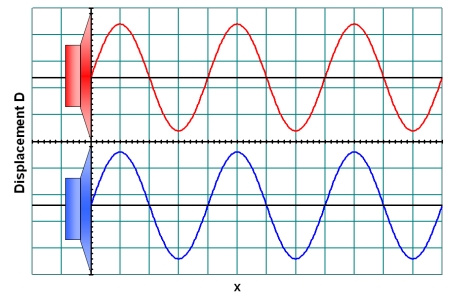
- 0
- 1/2π (90°)
- π (180°)
- 3/2π (270°)
Consider the two loudspeakers in the diagram below. The loudspeakers, shown at t = 0, are playing sound of the same frequency. What is the total phase difference, Δφ = (φbottom 0 − φtop 0) + 2π Δx/λ, by which the bottom blue wave leads the top red wave?
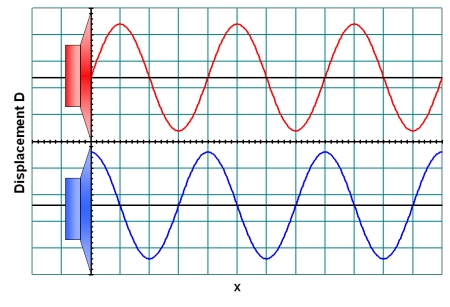
- 0
- 1/2π (90°)
- π (180°)
- 3/2π (270°)
Consider the two loudspeakers in the diagram below. The loudspeakers, shown at t = 0, are playing sound of the same frequency. What is the total phase difference, Δφ = (φbottom 0 − φtop 0) + 2π Δx/λ, by which the bottom blue wave leads the top red wave?
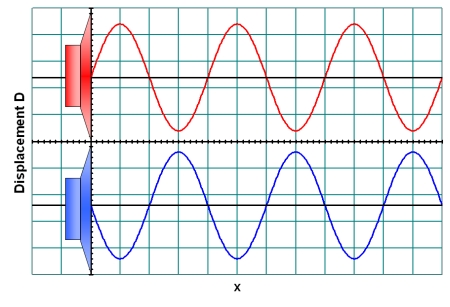
- 0
- 1/2π (90°)
- π (180°)
- 3/2π (270°)
Consider the two loudspeakers in the diagram below. The loudspeakers, shown at t = 0, are playing sound of the same frequency. What is the total phase difference, Δφ = (φbottom 0 − φtop 0) + 2π Δx/λ, by which the bottom blue wave leads the top red wave?
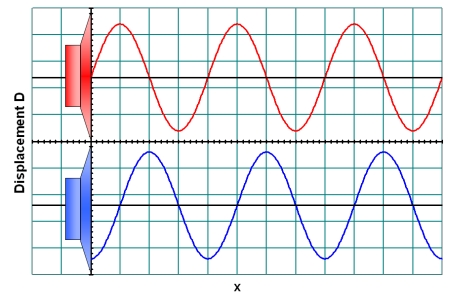
- 0
- 1/2π (90°)
- π (180°)
- 3/2π (270°)
Consider the two loudspeakers in the diagram below. The loudspeakers, shown at t = 0, are playing sound of the same frequency. What is the total phase difference, Δφ = (φbottom 0 − φtop 0) + 2π Δx/λ, by which the bottom blue wave leads the top red wave?

- 0
- 1/2π (90°)
- π (180°)
- 3/2π (270°)
Consider the two loudspeakers in the diagram below. The loudspeakers, shown at t = 0, are playing sound of the same frequency. What is the total phase difference, Δφ = (φbottom 0 − φtop 0) + 2π Δx/λ, by which the bottom blue wave leads the top red wave?
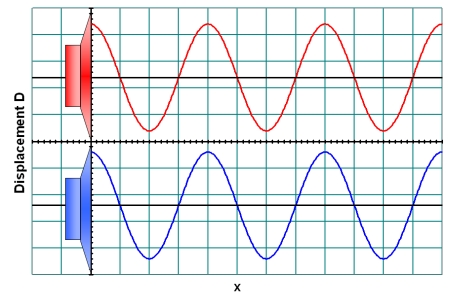
- 0
- 1/2π (90°)
- π (180°)
- 3/2π (270°)
Consider the two loudspeakers in the diagram below. The loudspeakers, shown at t = 0, are playing sound of the same frequency. What is the total phase difference, Δφ = (φbottom 0 − φtop 0) + 2π Δx/λ, by which the bottom blue wave leads the top red wave?
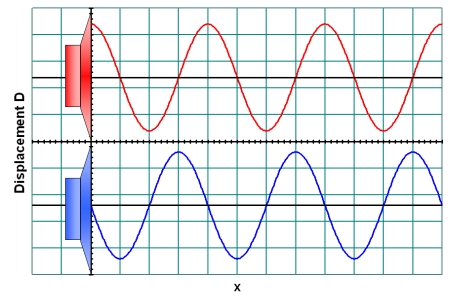
- 0
- 1/2π (90°)
- π (180°)
- 3/2π (270°)
Consider the two loudspeakers in the diagram below. The loudspeakers, shown at t = 0, are playing sound of the same frequency. What is the total phase difference, Δφ = (φbottom 0 − φtop 0) + 2π Δx/λ, by which the bottom blue wave leads the top red wave?
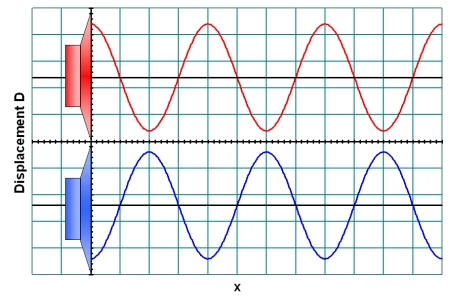
- 0
- 1/2π (90°)
- π (180°)
- 3/2π (270°)
Consider the two loudspeakers in the diagram below. The loudspeakers, shown at t = 0, are playing sound of the same frequency. What is the total phase difference, Δφ = (φbottom 0 − φtop 0) + 2π Δx/λ, by which the bottom blue wave leads the top red wave?
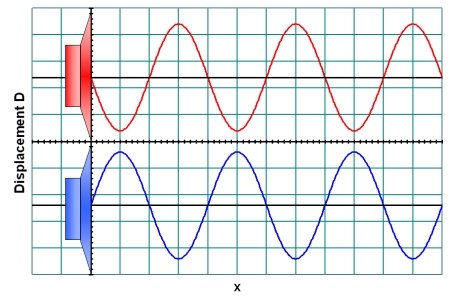
- 0
- 1/2π (90°)
- π (180°)
- 3/2π (270°)
Consider the two loudspeakers in the diagram below. The loudspeakers, shown at t = 0, are playing sound of the same frequency. What is the total phase difference, Δφ = (φbottom 0 − φtop 0) + 2π Δx/λ, by which the bottom blue wave leads the top red wave?
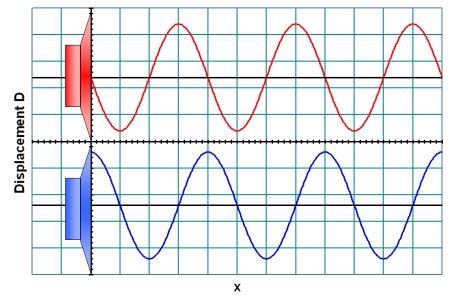
- 0
- 1/2π (90°)
- π (180°)
- 3/2π (270°)
Consider the two loudspeakers in the diagram below. The loudspeakers, shown at t = 0, are playing sound of the same frequency. What is the total phase difference, Δφ = (φbottom 0 − φtop 0) + 2π Δx/λ, by which the bottom blue wave leads the top red wave?
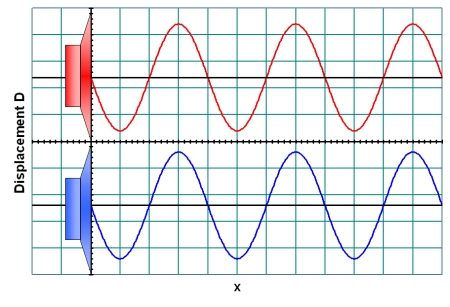
- 0
- 1/2π (90°)
- π (180°)
- 3/2π (270°)
Consider the two loudspeakers in the diagram below. The loudspeakers, shown at t = 0, are playing sound of the same frequency. What is the total phase difference, Δφ = (φbottom 0 − φtop 0) + 2π Δx/λ, by which the bottom blue wave leads the top red wave?
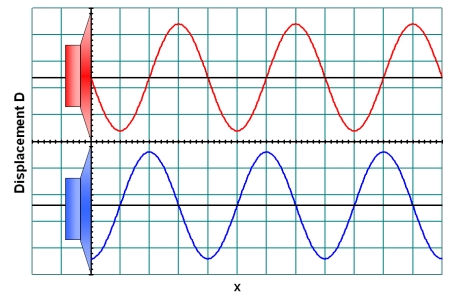
- 0
- 1/2π (90°)
- π (180°)
- 3/2π (270°)
Consider the two loudspeakers in the diagram below. The loudspeakers, shown at t = 0, are playing sound of the same frequency. What is the total phase difference, Δφ = (φbottom 0 − φtop 0) + 2π Δx/λ, by which the bottom blue wave leads the top red wave?
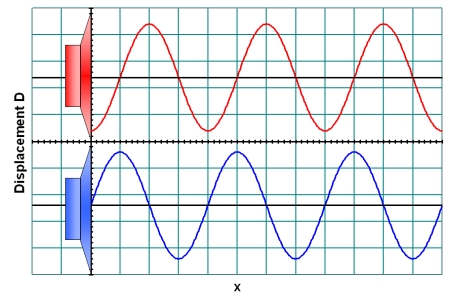
- 0
- 1/2π (90°)
- π (180°)
- 3/2π (270°)
Consider the two loudspeakers in the diagram below. The loudspeakers, shown at t = 0, are playing sound of the same frequency. What is the total phase difference, Δφ = (φbottom 0 − φtop 0) + 2π Δx/λ, by which the bottom blue wave leads the top red wave?
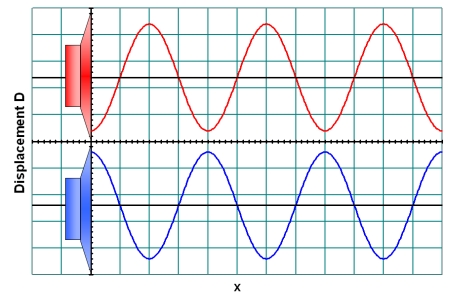
- 0
- 1/2π (90°)
- π (180°)
- 3/2π (270°)
Consider the two loudspeakers in the diagram below. The loudspeakers, shown at t = 0, are playing sound of the same frequency. What is the total phase difference, Δφ = (φbottom 0 − φtop 0) + 2π Δx/λ, by which the bottom blue wave leads the top red wave?
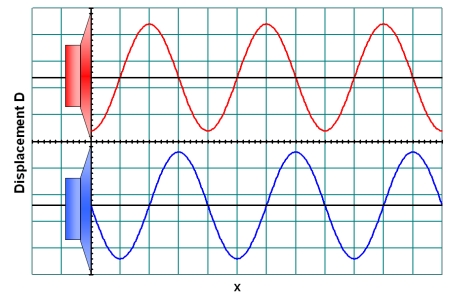
- 0
- 1/2π (90°)
- π (180°)
- 3/2π (270°)
Consider the two loudspeakers in the diagram below. The loudspeakers, shown at t = 0, are playing sound of the same frequency. What is the total phase difference, Δφ = (φbottom 0 − φtop 0) + 2π Δx/λ, by which the bottom blue wave leads the top red wave?
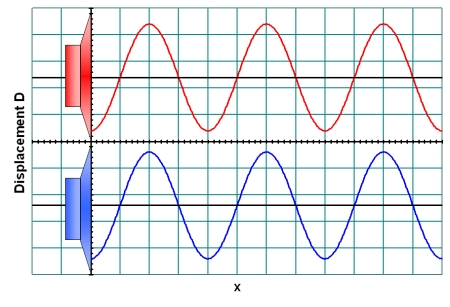
- 0
- 1/2π (90°)
- π (180°)
- 3/2π (270°)
Consider the two loudspeakers in the diagram below. The loudspeakers, shown at t = 0, are playing sound of the same frequency. What is the total phase difference, Δφ = (φbottom 0 − φtop 0) + 2π Δx/λ, by which the bottom blue wave leads the top red wave?
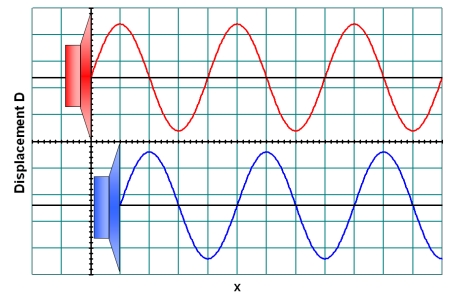
- 0
- 1/2π (90°)
- π (180°)
- 3/2π (270°)
Consider the two loudspeakers in the diagram below. The loudspeakers, shown at t = 0, are playing sound of the same frequency. What is the total phase difference, Δφ = (φbottom 0 − φtop 0) + 2π Δx/λ, by which the bottom blue wave leads the top red wave?
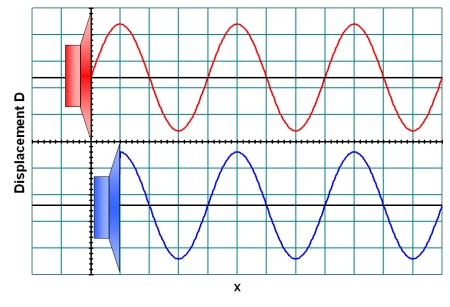
- 0
- 1/2π (90°)
- π (180°)
- 3/2π (270°)
Consider the two loudspeakers in the diagram below. The loudspeakers, shown at t = 0, are playing sound of the same frequency. What is the total phase difference, Δφ = (φbottom 0 − φtop 0) + 2π Δx/λ, by which the bottom blue wave leads the top red wave?
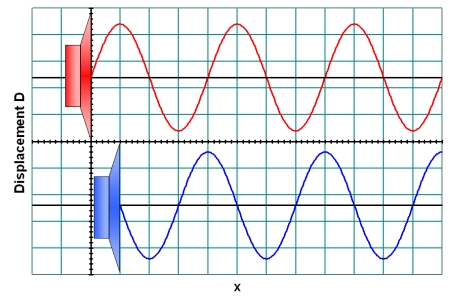
- 0
- 1/2π (90°)
- π (180°)
- 3/2π (270°)
Consider the two loudspeakers in the diagram below. The loudspeakers, shown at t = 0, are playing sound of the same frequency. What is the total phase difference, Δφ = (φbottom 0 − φtop 0) + 2π Δx/λ, by which the bottom blue wave leads the top red wave?
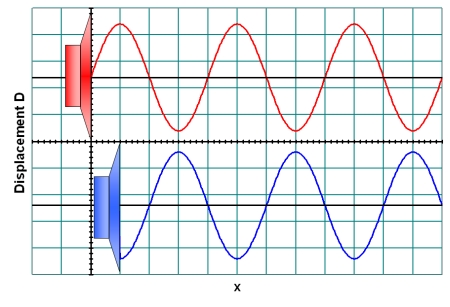
- 0
- 1/2π (90°)
- π (180°)
- 3/2π (270°)
Consider the two loudspeakers in the diagram below. The loudspeakers, shown at t = 0, are playing sound of the same frequency. What is the total phase difference, Δφ = (φbottom 0 − φtop 0) + 2π Δx/λ, by which the bottom blue wave leads the top red wave?
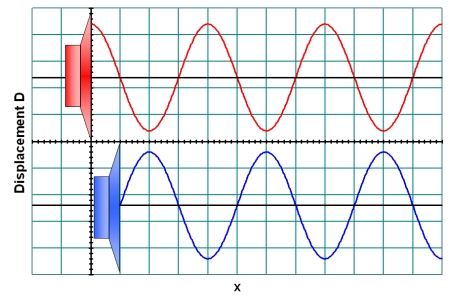
- 0
- 1/2π (90°)
- π (180°)
- 3/2π (270°)
Consider the two loudspeakers in the diagram below. The loudspeakers, shown at t = 0, are playing sound of the same frequency. What is the total phase difference, Δφ = (φbottom 0 − φtop 0) + 2π Δx/λ, by which the bottom blue wave leads the top red wave?
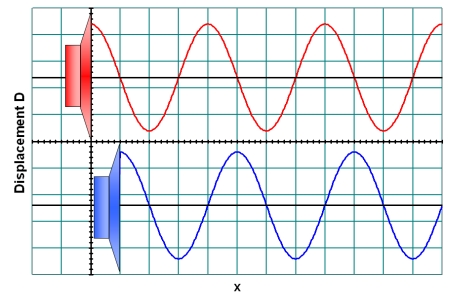
- 0
- 1/2π (90°)
- π (180°)
- 3/2π (270°)
Consider the two loudspeakers in the diagram below. The loudspeakers, shown at t = 0, are playing sound of the same frequency. What is the total phase difference, Δφ = (φbottom 0 − φtop 0) + 2π Δx/λ, by which the bottom blue wave leads the top red wave?
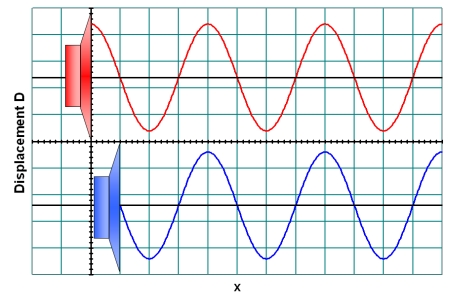
- 0
- 1/2π (90°)
- π (180°)
- 3/2π (270°)
Consider the two loudspeakers in the diagram below. The loudspeakers, shown at t = 0, are playing sound of the same frequency. What is the total phase difference, Δφ = (φbottom 0 − φtop 0) + 2π Δx/λ, by which the bottom blue wave leads the top red wave?
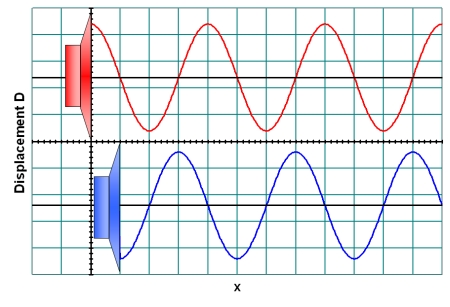
- 0
- 1/2π (90°)
- π (180°)
- 3/2π (270°)
Consider the two loudspeakers in the diagram below. The loudspeakers, shown at t = 0, are playing sound of the same frequency. What is the total phase difference, Δφ = (φbottom 0 − φtop 0) + 2π Δx/λ, by which the bottom blue wave leads the top red wave?
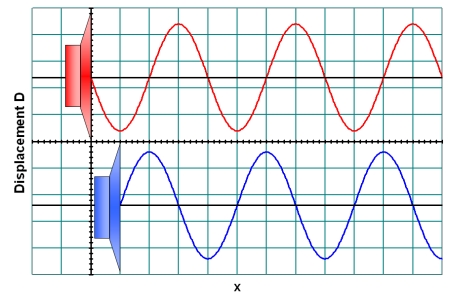
- 0
- 1/2π (90°)
- π (180°)
- 3/2π (270°)
Consider the two loudspeakers in the diagram below. The loudspeakers, shown at t = 0, are playing sound of the same frequency. What is the total phase difference, Δφ = (φbottom 0 − φtop 0) + 2π Δx/λ, by which the bottom blue wave leads the top red wave?
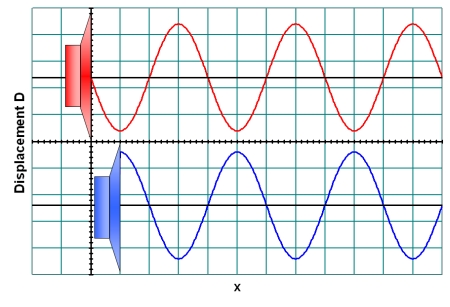
- 0
- 1/2π (90°)
- π (180°)
- 3/2π (270°)
Consider the two loudspeakers in the diagram below. The loudspeakers, shown at t = 0, are playing sound of the same frequency. What is the total phase difference, Δφ = (φbottom 0 − φtop 0) + 2π Δx/λ, by which the bottom blue wave leads the top red wave?
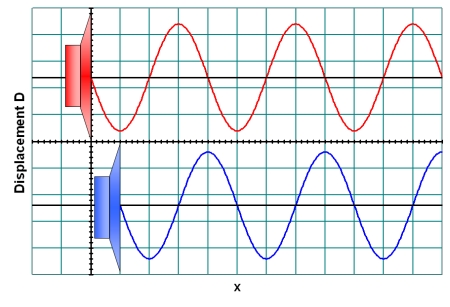
- 0
- 1/2π (90°)
- π (180°)
- 3/2π (270°)
Consider the two loudspeakers in the diagram below. The loudspeakers, shown at t = 0, are playing sound of the same frequency. What is the total phase difference, Δφ = (φbottom 0 − φtop 0) + 2π Δx/λ, by which the bottom blue wave leads the top red wave?
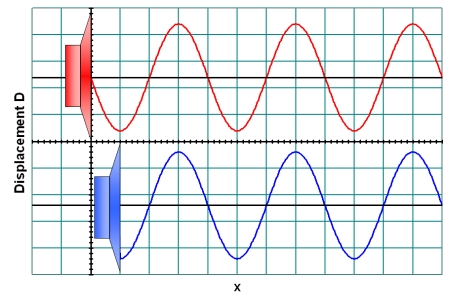
- 0
- 1/2π (90°)
- π (180°)
- 3/2π (270°)
Consider the two loudspeakers in the diagram below. The loudspeakers, shown at t = 0, are playing sound of the same frequency. What is the total phase difference, Δφ = (φbottom 0 − φtop 0) + 2π Δx/λ, by which the bottom blue wave leads the top red wave?
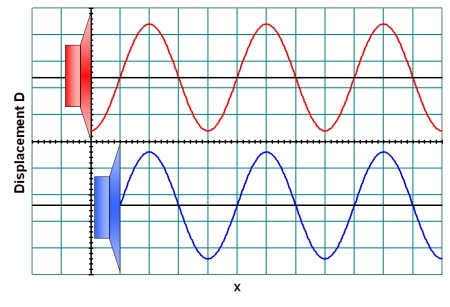
- 0
- 1/2π (90°)
- π (180°)
- 3/2π (270°)
Consider the two loudspeakers in the diagram below. The loudspeakers, shown at t = 0, are playing sound of the same frequency. What is the total phase difference, Δφ = (φbottom 0 − φtop 0) + 2π Δx/λ, by which the bottom blue wave leads the top red wave?
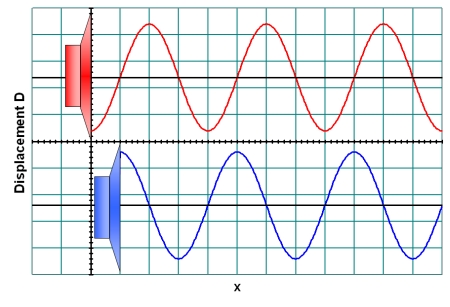
- 0
- 1/2π (90°)
- π (180°)
- 3/2π (270°)
Consider the two loudspeakers in the diagram below. The loudspeakers, shown at t = 0, are playing sound of the same frequency. What is the total phase difference, Δφ = (φbottom 0 − φtop 0) + 2π Δx/λ, by which the bottom blue wave leads the top red wave?
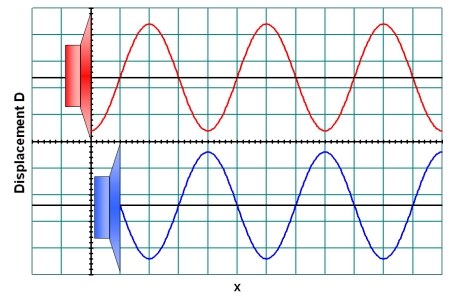
- 0
- 1/2π (90°)
- π (180°)
- 3/2π (270°)
Consider the two loudspeakers in the diagram below. The loudspeakers, shown at t = 0, are playing sound of the same frequency. What is the total phase difference, Δφ = (φbottom 0 − φtop 0) + 2π Δx/λ, by which the bottom blue wave leads the top red wave?
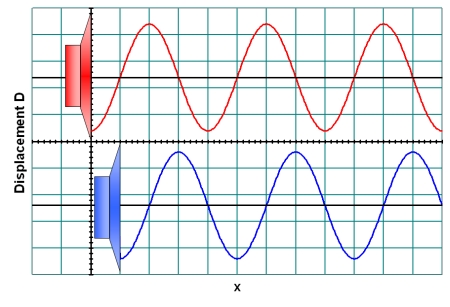
- 0
- 1/2π (90°)
- π (180°)
- 3/2π (270°)
Consider the two loudspeakers in the diagram below. The loudspeakers, shown at t = 0, are playing sound of the same frequency. What is the total phase difference, Δφ = (φbottom 0 − φtop 0) + 2π Δx/λ, by which the bottom blue wave leads the top red wave?
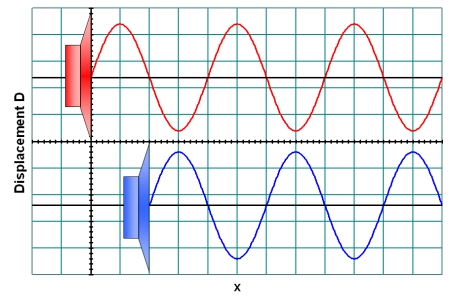
- 0
- 1/2π (90°)
- π (180°)
- 3/2π (270°)
Consider the two loudspeakers in the diagram below. The loudspeakers, shown at t = 0, are playing sound of the same frequency. What is the total phase difference, Δφ = (φbottom 0 − φtop 0) + 2π Δx/λ, by which the bottom blue wave leads the top red wave?
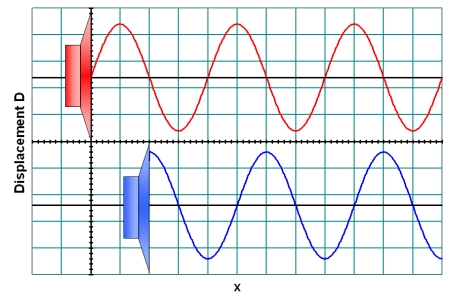
- 0
- 1/2π (90°)
- π (180°)
- 3/2π (270°)
Consider the two loudspeakers in the diagram below. The loudspeakers, shown at t = 0, are playing sound of the same frequency. What is the total phase difference, Δφ = (φbottom 0 − φtop 0) + 2π Δx/λ, by which the bottom blue wave leads the top red wave?
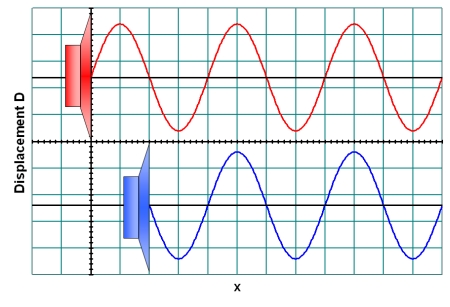
- 0
- 1/2π (90°)
- π (180°)
- 3/2π (270°)
Consider the two loudspeakers in the diagram below. The loudspeakers, shown at t = 0, are playing sound of the same frequency. What is the total phase difference, Δφ = (φbottom 0 − φtop 0) + 2π Δx/λ, by which the bottom blue wave leads the top red wave?
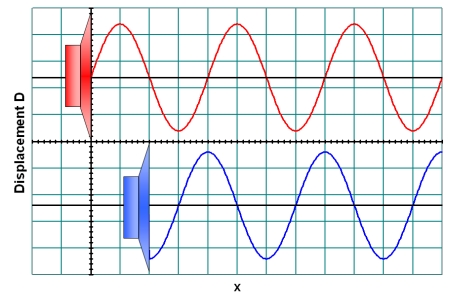
- 0
- 1/2π (90°)
- π (180°)
- 3/2π (270°)
Consider the two loudspeakers in the diagram below. The loudspeakers, shown at t = 0, are playing sound of the same frequency. What is the total phase difference, Δφ = (φbottom 0 − φtop 0) + 2π Δx/λ, by which the bottom blue wave leads the top red wave?
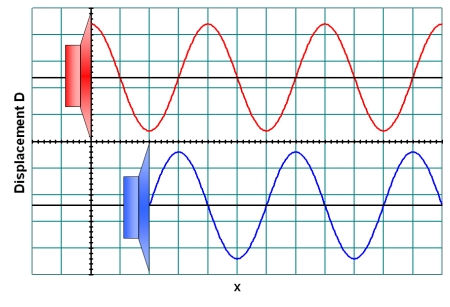
- 0
- 1/2π (90°)
- π (180°)
- 3/2π (270°)
Consider the two loudspeakers in the diagram below. The loudspeakers, shown at t = 0, are playing sound of the same frequency. What is the total phase difference, Δφ = (φbottom 0 − φtop 0) + 2π Δx/λ, by which the bottom blue wave leads the top red wave?
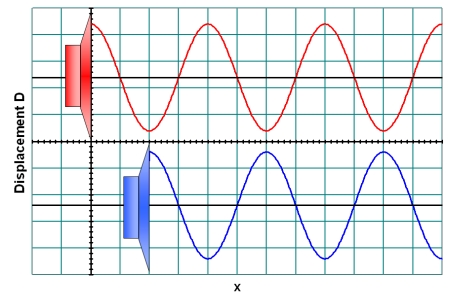
- 0
- 1/2π (90°)
- π (180°)
- 3/2π (270°)
Consider the two loudspeakers in the diagram below. The loudspeakers, shown at t = 0, are playing sound of the same frequency. What is the total phase difference, Δφ = (φbottom 0 − φtop 0) + 2π Δx/λ, by which the bottom blue wave leads the top red wave?
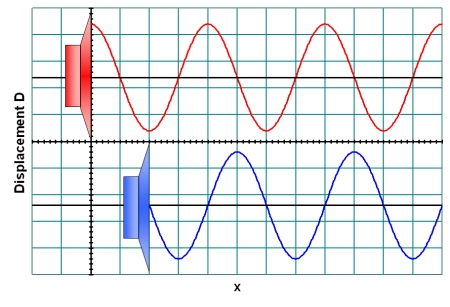
- 0
- 1/2π (90°)
- π (180°)
- 3/2π (270°)
Consider the two loudspeakers in the diagram below. The loudspeakers, shown at t = 0, are playing sound of the same frequency. What is the total phase difference, Δφ = (φbottom 0 − φtop 0) + 2π Δx/λ, by which the bottom blue wave leads the top red wave?
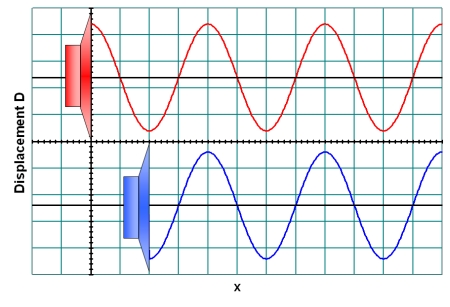
- 0
- 1/2π (90°)
- π (180°)
- 3/2π (270°)
Consider the two loudspeakers in the diagram below. The loudspeakers, shown at t = 0, are playing sound of the same frequency. What is the total phase difference, Δφ = (φbottom 0 − φtop 0) + 2π Δx/λ, by which the bottom blue wave leads the top red wave?
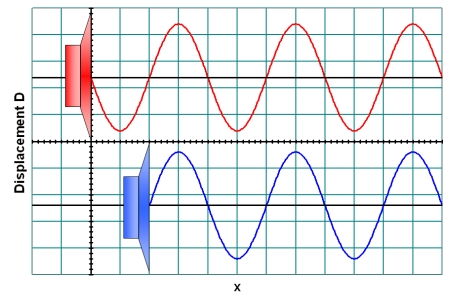
- 0
- 1/2π (90°)
- π (180°)
- 3/2π (270°)
Consider the two loudspeakers in the diagram below. The loudspeakers, shown at t = 0, are playing sound of the same frequency. What is the total phase difference, Δφ = (φbottom 0 − φtop 0) + 2π Δx/λ, by which the bottom blue wave leads the top red wave?
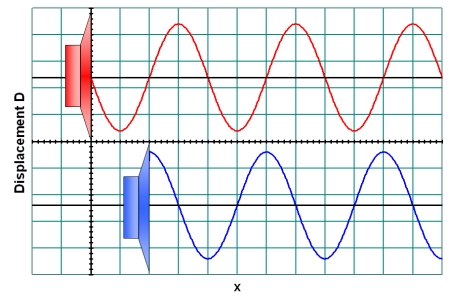
- 0
- 1/2π (90°)
- π (180°)
- 3/2π (270°)
Consider the two loudspeakers in the diagram below. The loudspeakers, shown at t = 0, are playing sound of the same frequency. What is the total phase difference, Δφ = (φbottom 0 − φtop 0) + 2π Δx/λ, by which the bottom blue wave leads the top red wave?
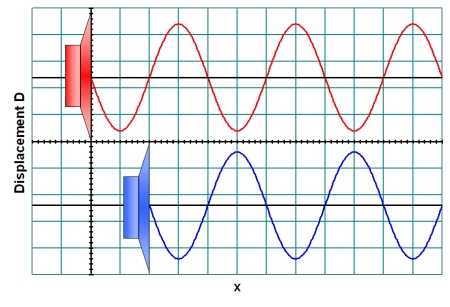
- 0
- 1/2π (90°)
- π (180°)
- 3/2π (270°)
Consider the two loudspeakers in the diagram below. The loudspeakers, shown at t = 0, are playing sound of the same frequency. What is the total phase difference, Δφ = (φbottom 0 − φtop 0) + 2π Δx/λ, by which the bottom blue wave leads the top red wave?
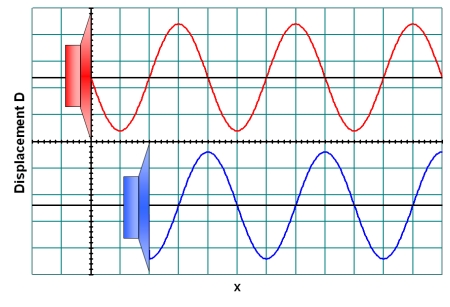
- 0
- 1/2π (90°)
- π (180°)
- 3/2π (270°)
Consider the two loudspeakers in the diagram below. The loudspeakers, shown at t = 0, are playing sound of the same frequency. What is the total phase difference, Δφ = (φbottom 0 − φtop 0) + 2π Δx/λ, by which the bottom blue wave leads the top red wave?
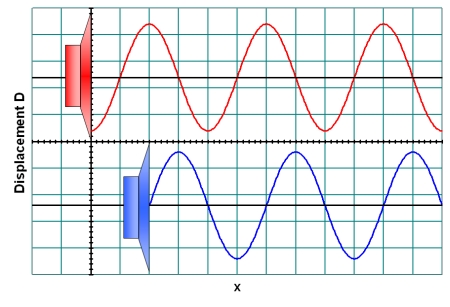
- 0
- 1/2π (90°)
- π (180°)
- 3/2π (270°)
Consider the two loudspeakers in the diagram below. The loudspeakers, shown at t = 0, are playing sound of the same frequency. What is the total phase difference, Δφ = (φbottom 0 − φtop 0) + 2π Δx/λ, by which the bottom blue wave leads the top red wave?
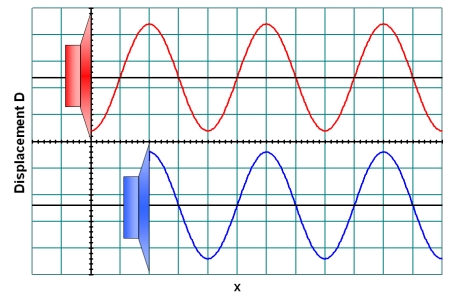
- 0
- 1/2π (90°)
- π (180°)
- 3/2π (270°)
Consider the two loudspeakers in the diagram below. The loudspeakers, shown at t = 0, are playing sound of the same frequency. What is the total phase difference, Δφ = (φbottom 0 − φtop 0) + 2π Δx/λ, by which the bottom blue wave leads the top red wave?
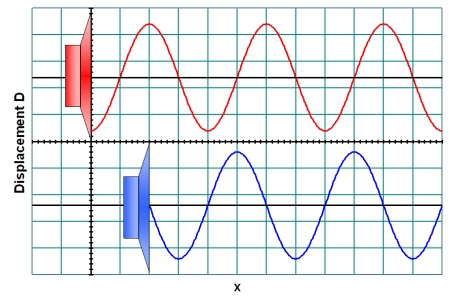
- 0
- 1/2π (90°)
- π (180°)
- 3/2π (270°)
Consider the two loudspeakers in the diagram below. The loudspeakers, shown at t = 0, are playing sound of the same frequency. What is the total phase difference, Δφ = (φbottom 0 − φtop 0) + 2π Δx/λ, by which the bottom blue wave leads the top red wave?
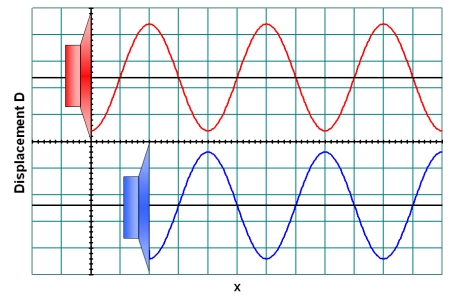
- 0
- 1/2π (90°)
- π (180°)
- 3/2π (270°)
Consider the two loudspeakers in the diagram below. The loudspeakers, shown at t = 0, are playing sound of the same frequency. What is the total phase difference, Δφ = (φbottom 0 − φtop 0) + 2π Δx/λ, by which the bottom blue wave leads the top red wave?
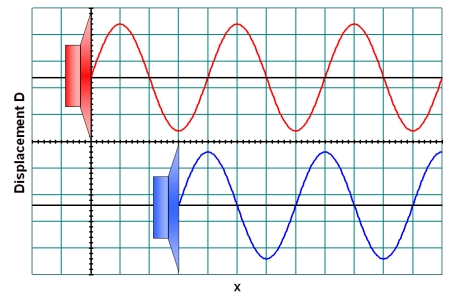
- 0
- 1/2π (90°)
- π (180°)
- 3/2π (270°)
Consider the two loudspeakers in the diagram below. The loudspeakers, shown at t = 0, are playing sound of the same frequency. What is the total phase difference, Δφ = (φbottom 0 − φtop 0) + 2π Δx/λ, by which the bottom blue wave leads the top red wave?
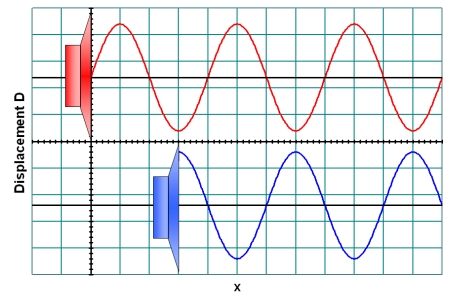
- 0
- 1/2π (90°)
- π (180°)
- 3/2π (270°)
Consider the two loudspeakers in the diagram below. The loudspeakers, shown at t = 0, are playing sound of the same frequency. What is the total phase difference, Δφ = (φbottom 0 − φtop 0) + 2π Δx/λ, by which the bottom blue wave leads the top red wave?
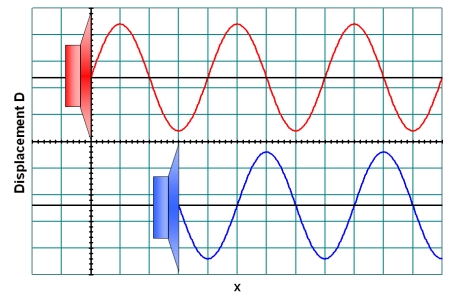
- 0
- 1/2π (90°)
- π (180°)
- 3/2π (270°)
Consider the two loudspeakers in the diagram below. The loudspeakers, shown at t = 0, are playing sound of the same frequency. What is the total phase difference, Δφ = (φbottom 0 − φtop 0) + 2π Δx/λ, by which the bottom blue wave leads the top red wave?
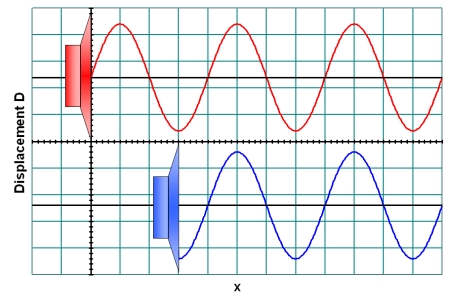
- 0
- 1/2π (90°)
- π (180°)
- 3/2π (270°)
Consider the two loudspeakers in the diagram below. The loudspeakers, shown at t = 0, are playing sound of the same frequency. What is the total phase difference, Δφ = (φbottom 0 − φtop 0) + 2π Δx/λ, by which the bottom blue wave leads the top red wave?
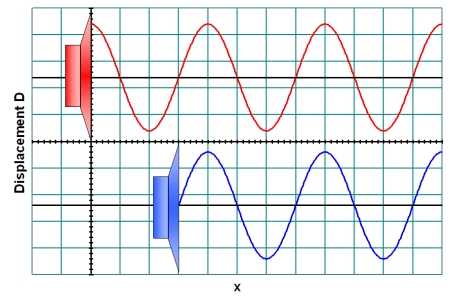
- 0
- 1/2π (90°)
- π (180°)
- 3/2π (270°)
Consider the two loudspeakers in the diagram below. The loudspeakers, shown at t = 0, are playing sound of the same frequency. What is the total phase difference, Δφ = (φbottom 0 − φtop 0) + 2π Δx/λ, by which the bottom blue wave leads the top red wave?
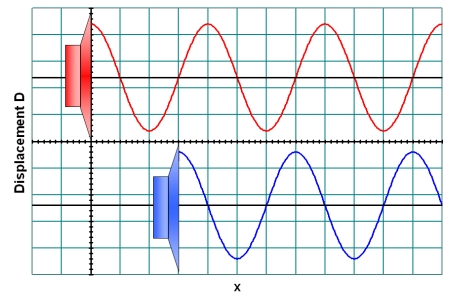
- 0
- 1/2π (90°)
- π (180°)
- 3/2π (270°)
Consider the two loudspeakers in the diagram below. The loudspeakers, shown at t = 0, are playing sound of the same frequency. What is the total phase difference, Δφ = (φbottom 0 − φtop 0) + 2π Δx/λ, by which the bottom blue wave leads the top red wave?
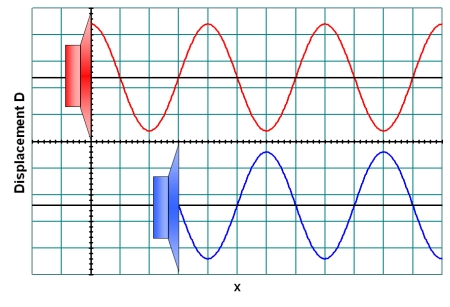
- 0
- 1/2π (90°)
- π (180°)
- 3/2π (270°)
Consider the two loudspeakers in the diagram below. The loudspeakers, shown at t = 0, are playing sound of the same frequency. What is the total phase difference, Δφ = (φbottom 0 − φtop 0) + 2π Δx/λ, by which the bottom blue wave leads the top red wave?
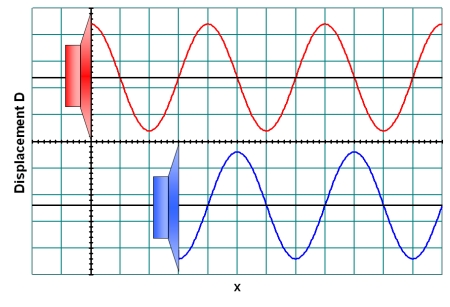
- 0
- 1/2π (90°)
- π (180°)
- 3/2π (270°)
Consider the two loudspeakers in the diagram below. The loudspeakers, shown at t = 0, are playing sound of the same frequency. What is the total phase difference, Δφ = (φbottom 0 − φtop 0) + 2π Δx/λ, by which the bottom blue wave leads the top red wave?
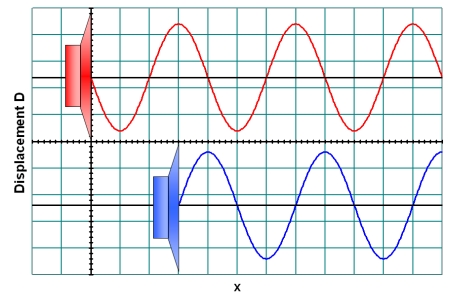
- 0
- 1/2π (90°)
- π (180°)
- 3/2π (270°)
Consider the two loudspeakers in the diagram below. The loudspeakers, shown at t = 0, are playing sound of the same frequency. What is the total phase difference, Δφ = (φbottom 0 − φtop 0) + 2π Δx/λ, by which the bottom blue wave leads the top red wave?
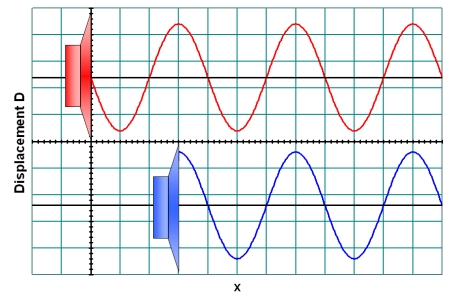
- 0
- 1/2π (90°)
- π (180°)
- 3/2π (270°)
Consider the two loudspeakers in the diagram below. The loudspeakers, shown at t = 0, are playing sound of the same frequency. What is the total phase difference, Δφ = (φbottom 0 − φtop 0) + 2π Δx/λ, by which the bottom blue wave leads the top red wave?
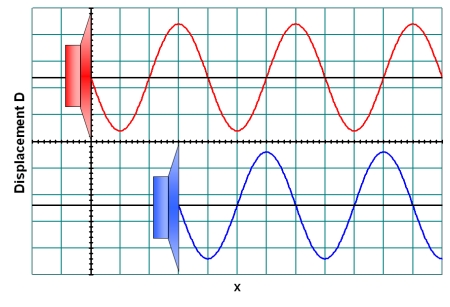
- 0
- 1/2π (90°)
- π (180°)
- 3/2π (270°)
Consider the two loudspeakers in the diagram below. The loudspeakers, shown at t = 0, are playing sound of the same frequency. What is the total phase difference, Δφ = (φbottom 0 − φtop 0) + 2π Δx/λ, by which the bottom blue wave leads the top red wave?
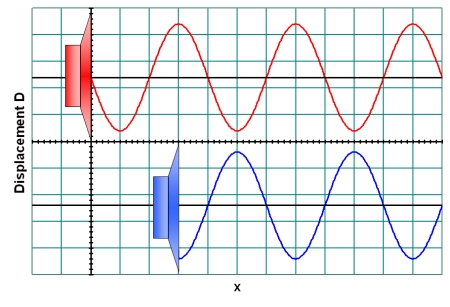
- 0
- 1/2π (90°)
- π (180°)
- 3/2π (270°)
Consider the two loudspeakers in the diagram below. The loudspeakers, shown at t = 0, are playing sound of the same frequency. What is the total phase difference, Δφ = (φbottom 0 − φtop 0) + 2π Δx/λ, by which the bottom blue wave leads the top red wave?
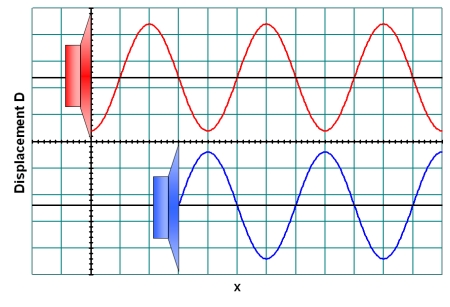
- 0
- 1/2π (90°)
- π (180°)
- 3/2π (270°)
Consider the two loudspeakers in the diagram below. The loudspeakers, shown at t = 0, are playing sound of the same frequency. What is the total phase difference, Δφ = (φbottom 0 − φtop 0) + 2π Δx/λ, by which the bottom blue wave leads the top red wave?
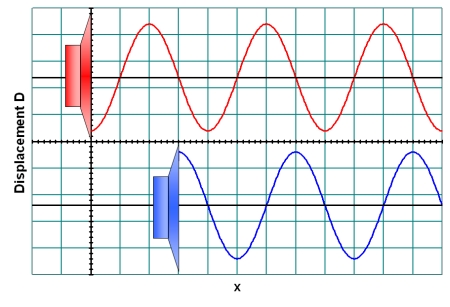
- 0
- 1/2π (90°)
- π (180°)
- 3/2π (270°)
Consider the two loudspeakers in the diagram below. The loudspeakers, shown at t = 0, are playing sound of the same frequency. What is the total phase difference, Δφ = (φbottom 0 − φtop 0) + 2π Δx/λ, by which the bottom blue wave leads the top red wave?
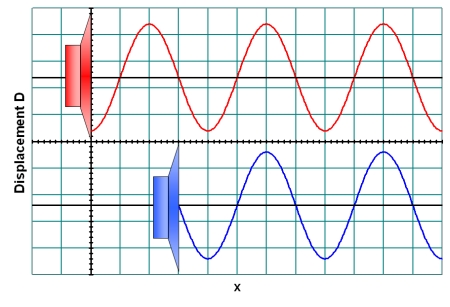
- 0
- 1/2π (90°)
- π (180°)
- 3/2π (270°)
Consider the two loudspeakers in the diagram below. The loudspeakers, shown at t = 0, are playing sound of the same frequency. What is the total phase difference, Δφ = (φbottom 0 − φtop 0) + 2π Δx/λ, by which the bottom blue wave leads the top red wave?
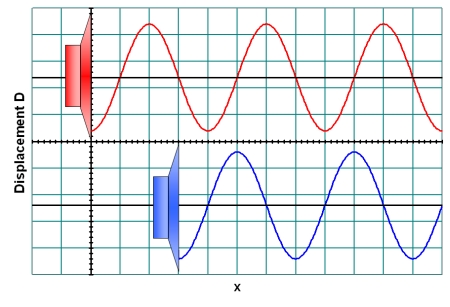
- 0
- 1/2π (90°)
- π (180°)
- 3/2π (270°)
Consider the two loudspeakers in the diagram below. The loudspeakers, shown at t = 0, are playing sound of the same frequency. What is the total phase difference, Δφ = (φbottom 0 − φtop 0) + 2π Δx/λ, by which the bottom blue wave leads the top red wave?
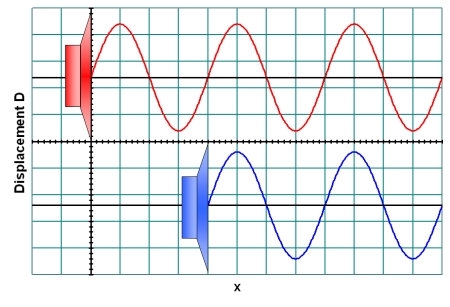
- 0
- 1/2π (90°)
- π (180°)
- 3/2π (270°)
Consider the two loudspeakers in the diagram below. The loudspeakers, shown at t = 0, are playing sound of the same frequency. What is the total phase difference, Δφ = (φbottom 0 − φtop 0) + 2π Δx/λ, by which the bottom blue wave leads the top red wave?
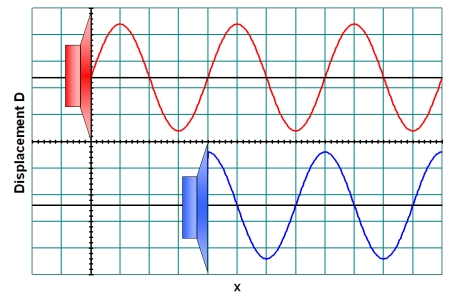
- 0
- 1/2π (90°)
- π (180°)
- 3/2π (270°)
Consider the two loudspeakers in the diagram below. The loudspeakers, shown at t = 0, are playing sound of the same frequency. What is the total phase difference, Δφ = (φbottom 0 − φtop 0) + 2π Δx/λ, by which the bottom blue wave leads the top red wave?
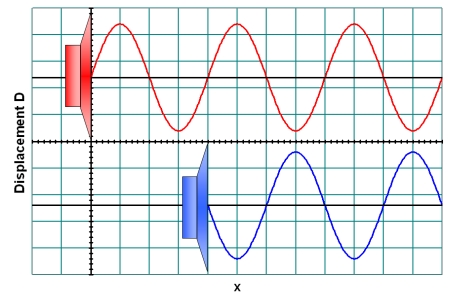
- 0
- 1/2π (90°)
- π (180°)
- 3/2π (270°)
Consider the two loudspeakers in the diagram below. The loudspeakers, shown at t = 0, are playing sound of the same frequency. What is the total phase difference, Δφ = (φbottom 0 − φtop 0) + 2π Δx/λ, by which the bottom blue wave leads the top red wave?
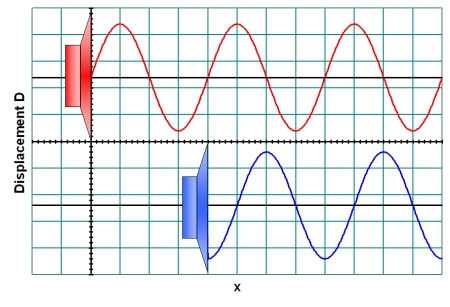
- 0
- 1/2π (90°)
- π (180°)
- 3/2π (270°)
Consider the two loudspeakers in the diagram below. The loudspeakers, shown at t = 0, are playing sound of the same frequency. What is the total phase difference, Δφ = (φbottom 0 − φtop 0) + 2π Δx/λ, by which the bottom blue wave leads the top red wave?
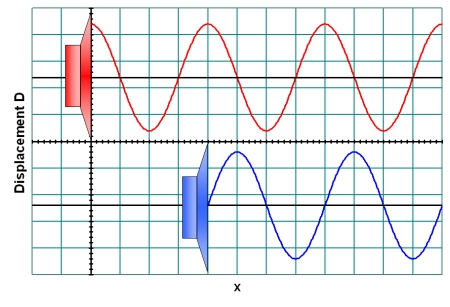
- 0
- 1/2π (90°)
- π (180°)
- 3/2π (270°)
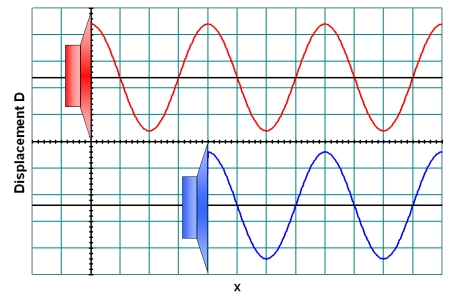
Consider the two loudspeakers in the diagram below. The loudspeakers, shown at t = 0, are playing sound of the same frequency. What is the total phase difference, Δφ = (φbottom 0 − φtop 0) + 2π Δx/λ, by which the bottom blue wave leads the top red wave?
- 0
- 1/2π (90°)
- π (180°)
- 3/2π (270°)
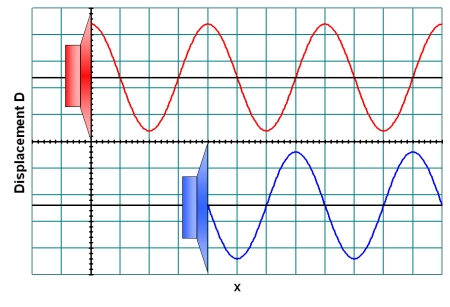
Consider the two loudspeakers in the diagram below. The loudspeakers, shown at t = 0, are playing sound of the same frequency. What is the total phase difference, Δφ = (φbottom 0 − φtop 0) + 2π Δx/λ, by which the bottom blue wave leads the top red wave?
- 0
- 1/2π (90°)
- π (180°)
- 3/2π (270°)
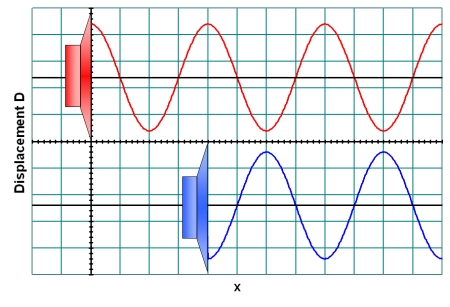
Consider the two loudspeakers in the diagram below. The loudspeakers, shown at t = 0, are playing sound of the same frequency. What is the total phase difference, Δφ = (φbottom 0 − φtop 0) + 2π Δx/λ, by which the bottom blue wave leads the top red wave?
- 0
- 1/2π (90°)
- π (180°)
- 3/2π (270°)
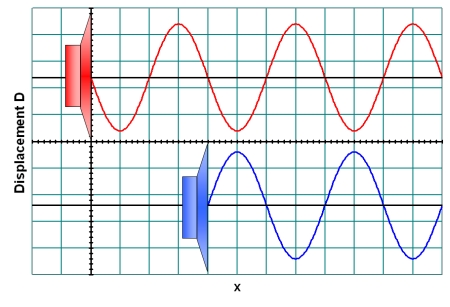
Consider the two loudspeakers in the diagram below. The loudspeakers, shown at t = 0, are playing sound of the same frequency. What is the total phase difference, Δφ = (φbottom 0 − φtop 0) + 2π Δx/λ, by which the bottom blue wave leads the top red wave?
- 0
- 1/2π (90°)
- π (180°)
- 3/2π (270°)
Consider the two loudspeakers in the diagram below. The loudspeakers, shown at t = 0, are playing sound of the same frequency. What is the total phase difference, Δφ = (φbottom 0 − φtop 0) + 2π Δx/λ, by which the bottom blue wave leads the top red wave?
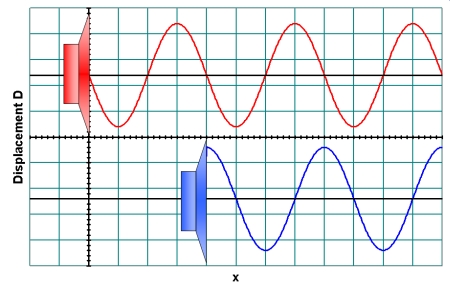
- 0
- 1/2π (90°)
- π (180°)
- 3/2π (270°)
Consider the two loudspeakers in the diagram below. The loudspeakers, shown at t = 0, are playing sound of the same frequency. What is the total phase difference, Δφ = (φbottom 0 − φtop 0) + 2π Δx/λ, by which the bottom blue wave leads the top red wave?
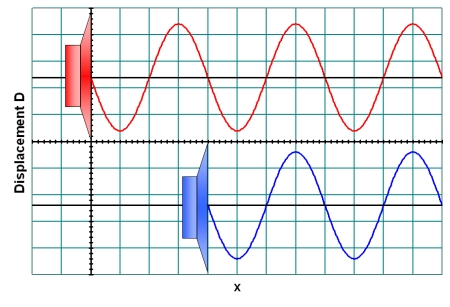
- 0
- 1/2π (90°)
- π (180°)
- 3/2π (270°)
Consider the two loudspeakers in the diagram below. The loudspeakers, shown at t = 0, are playing sound of the same frequency. What is the total phase difference, Δφ = (φbottom 0 − φtop 0) + 2π Δx/λ, by which the bottom blue wave leads the top red wave?
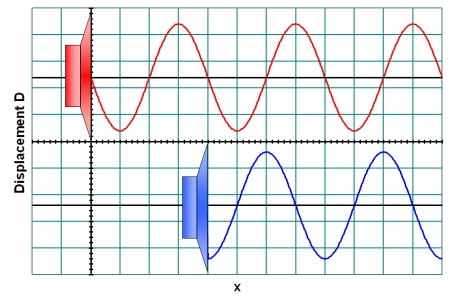
- 0
- 1/2π (90°)
- π (180°)
- 3/2π (270°)
Consider the two loudspeakers in the diagram below. The loudspeakers, shown at t = 0, are playing sound of the same frequency. What is the total phase difference, Δφ = (φbottom 0 − φtop 0) + 2π Δx/λ, by which the bottom blue wave leads the top red wave?
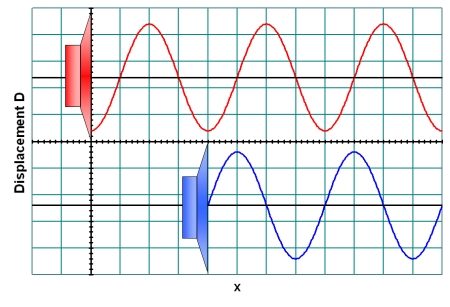
- 0
- 1/2π (90°)
- π (180°)
- 3/2π (270°)
Consider the two loudspeakers in the diagram below. The loudspeakers, shown at t = 0, are playing sound of the same frequency. What is the total phase difference, Δφ = (φbottom 0 − φtop 0) + 2π Δx/λ, by which the bottom blue wave leads the top red wave?
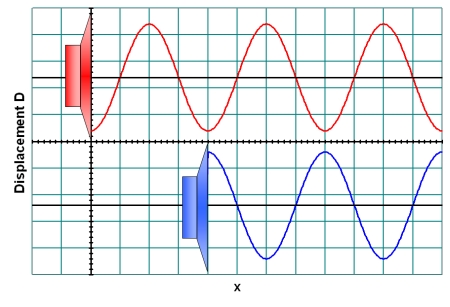
- 0
- 1/2π (90°)
- π (180°)
- 3/2π (270°)
Consider the two loudspeakers in the diagram below. The loudspeakers, shown at t = 0, are playing sound of the same frequency. What is the total phase difference, Δφ = (φbottom 0 − φtop 0) + 2π Δx/λ, by which the bottom blue wave leads the top red wave?
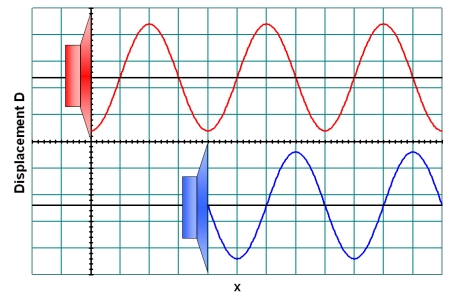
- 0
- 1/2π (90°)
- π (180°)
- 3/2π (270°)
Consider the two loudspeakers in the diagram below. The loudspeakers, shown at t = 0, are playing sound of the same frequency. What is the total phase difference, Δφ = (φbottom 0 − φtop 0) + 2π Δx/λ, by which the bottom blue wave leads the top red wave?
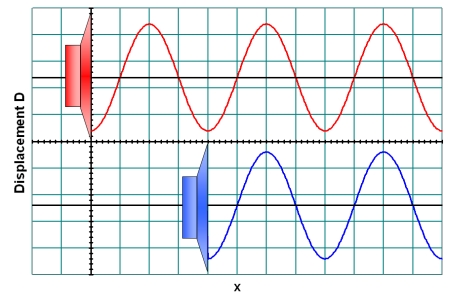
- 0
- 1/2π (90°)
- π (180°)
- 3/2π (270°)